One of the most common questions in used clothing wholesale is simple: “How many items are in a 20 kg box?”
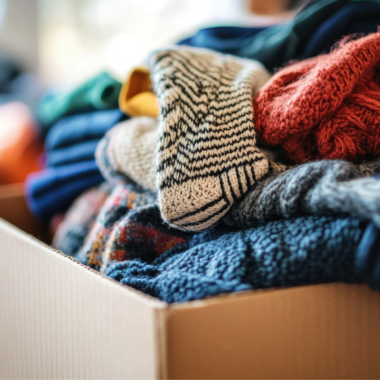
The honest answer: there is no single fixed number — because wholesale is sold by weight, not by piece count. A 20 kg box filled with light summer tops will contain far more items than a 20 kg box filled with coats or thick knitwear.
This guide gives you realistic item count ranges, explains what changes them, and shows how to estimate ROI so you buy the right stock for your resale model (thrift store, marketplaces, or live sales).
Quick action:
Why there is no “one number” for a 20 kg used clothing box
A wholesale box is defined by weight (20 kg), not by a guaranteed number of pieces. The average weight per item changes dramatically depending on:
- Category focus (t-shirts vs jeans vs coats)
- Season (spring/summer vs autumn/winter)
- Fabric density (denim, wool, heavy knits)
- Item construction (lined jackets, thick hoodies, heavy embellishments)
- Mix composition (more bottoms usually = fewer pieces)
So the right question is not “How many items exactly?” but:
- What is a realistic range for this category and season?
- How does item count affect my workflow and my margin?
Realistic item count ranges in a 20 kg box (by clothing type)
Below are practical, reseller-friendly ranges that align with what buyers typically experience when purchasing 20 kg used clothing boxes.
| Box type | Typical contents | Realistic range (20 kg) | Best for |
|---|---|---|---|
| Light items | T-shirts, tops, light dresses, summer mixes | ~45–80 items | High-volume online resale, fast rotation |
| Medium items | Hoodies, jeans, everyday mixed wear, mixed casual | ~30–55 items | Balanced ROI and predictable listing workflow |
| Heavy items | Coats, thick knitwear, winter jackets, heavy outerwear | ~15–35 items | Higher-ticket pieces, seasonal stores, winter peaks |
Important: these ranges are not “guarantees.” They’re realistic expectations for planning your workflow and pricing strategy.
Want more items per box? Start with spring/summer categories: Spring–Summer boxes →
Want higher-ticket winter stock? Focus on heavier categories: Autumn–Winter boxes →
What affects item count the most (in real life)
1) Season: Spring/Summer vs Autumn/Winter
Seasonality is the simplest predictor of piece count. Warm-season categories skew lighter (more pieces). Cold-season categories include heavier items (fewer pieces).
- SS tends to increase item count (more light layers)
- AW tends to decrease item count (coats, thick knits, denim-heavy mixes)
Shop by season here:
2) Category focus (tops vs bottoms)
Bottoms typically weigh more than tops. A box with many jeans or thick trousers will usually have fewer pieces than a box dominated by tops.
3) Fabric and construction
Denim, wool, heavy knits, lined items, and layered construction reduce the number of pieces per 20 kg. Lightweight synthetics and thin cotton increase it.
4) Mix composition and “hidden heaviness”
Even inside the same season, “mixed” categories vary. A “casual mix” can be top-heavy (more pieces) or denim-heavy (fewer pieces). This is normal in second-hand streams.
Why “40–100 items per 20 kg” can hurt your business
Many sellers throw out a huge number range like “40–100 items.” The problem is that it sets buyers up for disappointment and conflict.
Example: if a buyer expects 80–100 pieces and receives 25–35 heavy items (perfectly normal for coats/outerwear), they may feel misled — even if the box is correct by weight and category.
Best practice: communicate ranges by clothing type (light/medium/heavy). This:
- reduces complaints and chargeback risk
- improves repeat orders
- builds trust (especially in B2B)
A reseller-friendly way to estimate ROI (without guessing)
Item count matters, but it’s not the KPI. The KPI is: profit per hour and sell-through speed.
Use this simple model:
Step 1: Estimate your average selling price
- Everyday items: lower price, higher volume
- Higher-ticket items (outerwear, premium basics): higher price, lower volume
Step 2: Estimate your processing time per item
Include: QC + steaming + photos + listing + packaging.
Step 3: Calculate your “break-even pieces”
Break-even pieces = (box cost + shipping + your time cost) / average profit per sold item
If your time cost is high (or you’re slow at listing), a box with fewer, higher-ticket items can outperform a box with many low-value pieces.
Need help choosing the best category for your ROI model? Message us on WhatsApp: Chat on WhatsApp →
Choose the right box: more items vs higher ticket (decision rules)
If you want more items (and fast rotation)
- Choose lighter categories and spring/summer mixes
- Prioritize consistency and speed over perfection
- Great for marketplaces and high-frequency resale
Start here: Spring–Summer boxes →
If you want higher-ticket pieces (and stronger margin per item)
- Choose autumn/winter categories and heavier mixes
- Prepare a workflow for steaming, storage, and season timing
- Great for thrift stores and winter peaks
Start here: Autumn–Winter boxes →
What we guarantee (and what no one can guarantee in second-hand wholesale)
In weight-based wholesale, it’s important to separate realistic guarantees from marketing myths.
What can be guaranteed
- Box weight (e.g., 20 kg)
- Category scope (women/men/kids, season, mix type)
- Grade standard (e.g., Cream vs Grade A vs Mix, based on your definitions)
What cannot be guaranteed
- exact number of items
- specific brands
- exact size distribution
- exact style mix (second-hand is naturally variable)
Browse categories:
FAQ — 20 kg used clothes boxes
Is a 20 kg box always the same number of items?
No. A 20 kg box is always the same weight, but the number of items depends on average weight per item (category, season, fabric, and mix composition).
How many items should I expect in winter boxes?
For heavier autumn/winter categories (coats, thick knits, winter jackets), a realistic range is usually ~15–35 items per 20 kg box.
Do wholesale boxes guarantee brands or sizes?
In weight-based second-hand wholesale, specific brands and exact size distribution cannot be guaranteed. The correct expectations are: weight + category scope + grade standard.
Which 20 kg box is best for beginners?
Beginners typically do best with a Grade A / First Grade style category (predictable and easier to process) and a focused seasonal mix. If you want guidance, start with the main pillar guide and follow the “first order checklist.”
Read: The complete wholesale guide →
Where can I order boxes shipped to my country?
You can order directly through the shop. If you want market-specific guidance, use the dedicated country page.
Next steps (choose your path)
- Want to buy now? Browse 20 kg boxes →
- Need delivery details? Shipping & payment →
- Want the full framework? Wholesale & resale pillar guide →
- Targeting Lithuania? Lithuania market & ordering page →